


Editor’s Note: Tou Thao was a Minneapolis police officer and partner of Derek Chauvin. Along with Chauvin, he was tried and found guilty for his role in the death of George Floyd. Throughout the trials of Derek Chauvin and Mr. Thao, he has maintained that neither he nor Chauvin did anything wrong. Mr. Thao is a Christian and has been outspoken about the injustice of the whole George Floyd affair. Having lived through these seminal events, we believe it is incumbent upon us to allow Mr. Thao to share his perspective.
Daniel Strand: Tou Thao, thank you for being willing to talk to us about your involvement in the Derek Chauvin case, your own court case, and your subsequent imprisonment.
Tou Thao: Thank you for having me.
DS: Could you tell us a bit about who you are, your background, and why you became a police officer?
TT: My name is Tou Thao (pronounced “Tu Tao”). I was born and raised in Minnesota. I am a child of ethnic Hmong refugees (later U.S. citizens) from Laos. I spent part of my childhood in north Minneapolis.
For historical context, the Hmong supported and fought alongside Americans during the Vietnam War against the communists. After the war, the Hmong were heavily persecuted by the communists and later received refugee status in America. So America is where my parents met and married.
Personally, I have a wife and three kids.
As for why I became a police officer, that comes from my childhood at an elementary school age. One day, my father, in a fit of anger, beat me and my younger brother. Then it escalated to the point where he pointed a gun at us after my mother tried to intervene. We feared for our lives and fled to my aunt’s house. She called the police.
That was my first encounter with a Minneapolis police officer. Seeing how he dealt with that situation, during that traumatic part of my childhood, inspired me to want to be a police officer one day so I could help children who were in the same position I was in.
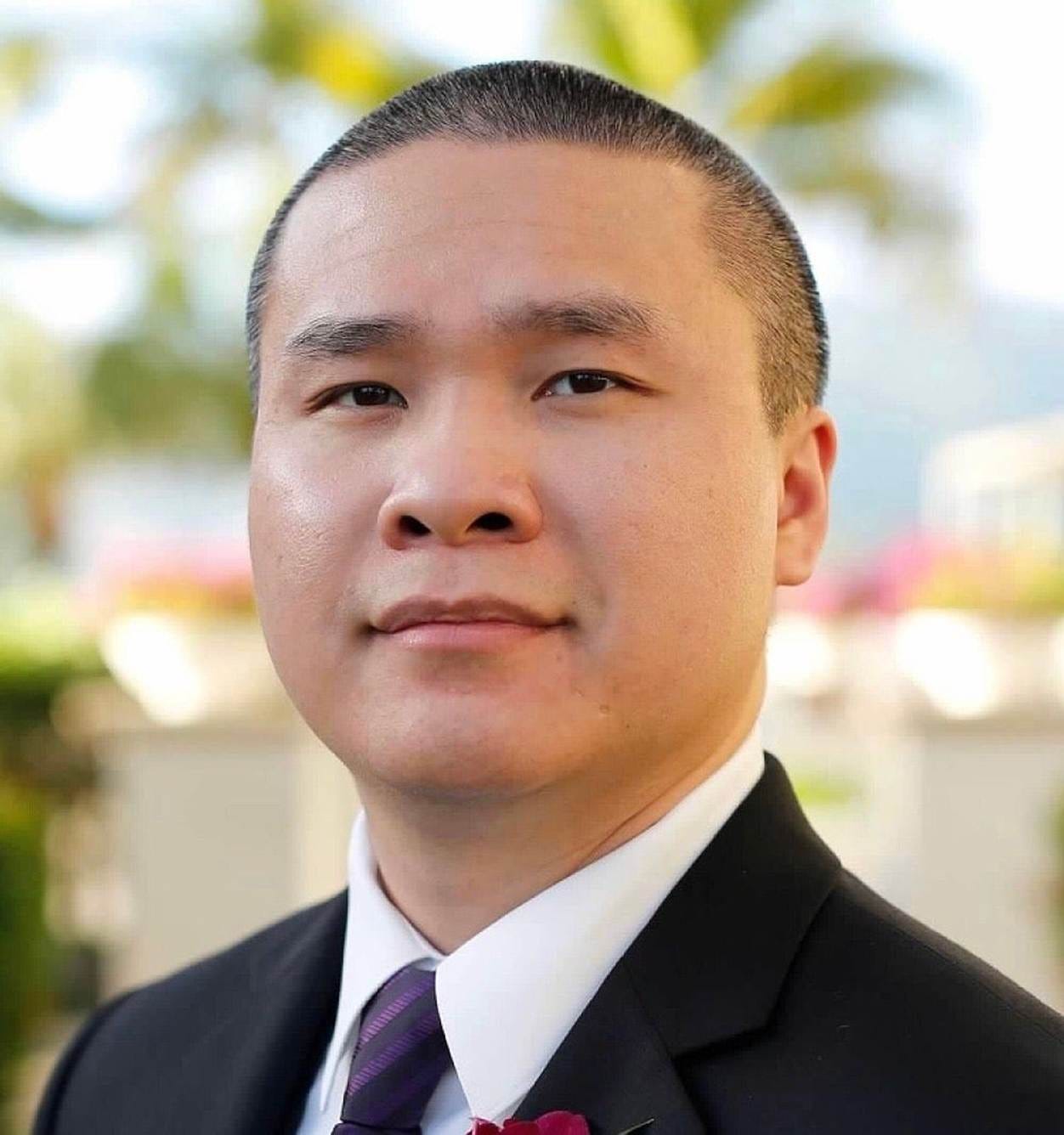
DS: Before we talk about your specific court case and time in jail, let’s talk about the Derek Chauvin Case. You knew Derek Chauvin personally; do you think he was motivated by racism or racial bias? He is portrayed as an evil racist who acted with deep malice toward black people. Is that accurate?
TT: That is absolutely not accurate at all. That portrayal is one-sided and politically motivated. It was driven by the media during a highly polarizing 2020 election year. I knew Derek personally. As a minority officer, if he were racist, why would I want to work with him? He also trained many people in the police department from different backgrounds, races, and ethnicities. I have never heard of anyone complaining that he was racist. That racial narrative was purely manufactured to stoke racial tension within the country.
DS: Do you think the court case against Chauvin was fair? What aspects of the court case were irregular or misleading? What does the public need to know about this case that they do not know?
TT: This is kind of a long answer that probably can’t be fully explained in this setting.
The case against Derek was absolutely unfair. The restraint Derek was using was called the Maximal Restraint Technique and taught by the police department. We know that the city of Minneapolis claimed that this restraint was never taught. Many officers have now come out stating that it was in fact taught in training.
In regard to the court case, if a judge has to put his thumb on the scale of justice and if the prosecutors have to cheat to win, then logically they never had a case to begin with, and so they would have to manufacture one.
It has already been reported that the original prosecutors were pressured to charge us and/or add charges. They opposed those actions and considered it unethical. As a result they removed themselves from the case. In my view, if it was unethical, then it is unconstitutional.
In addition, the medical examiner, Dr. Andrew Baker, told one of the original prosecuting attorneys, Amy Sweasy: “Amy, what happens when the actual evidence doesn’t match up with the public narrative that everyone’s already decided on?” He also said, “This is the kind of case that ends careers.”
And let’s not forget that the medical examiner appeared to be pressured professionally by an outside colleague, Dr. Roger Mitchell. According to court filings, Dr. Baker initially said he did not think neck compression played a part. Dr. Mitchell then told him neck compression had to be in the diagnosis and warned that he planned to publish a critical op-ed. After those conversations, neck compression was added to the final cause of death.
As officers, we are especially sensitive to how investigations are completed. From the onset of this investigation, it appeared prosecutors wanted to avoid any illicit drug discussions. This is no more obvious than when experienced forensic scientists investigated both Floyd’s vehicle and the squad car, but did not retrieve the illicit drugs (with Floyd’s DNA) from the two vehicles even though that evidence was in plain view. They only collected the evidence after defense attorneys forced them to. They allowed the drugs to sit there for about eight months so that the media and prosecutorial narrative could be given time to set in and judgments already made.
DS: It sounds like many of the politicians, authorities, and officials involved in the trial intentionally sought a particular outcome regardless of the facts or Derek Chauvin’s guilt or innocence. Is that right?
TT: Yes, absolutely.
Many of these politicians and so-called leaders made it blatantly clear in their press conferences and press interviews of our guilt. They made these decisions from an out-of-context 15-second clip.
DS: What do you think Minnesota Attorney General Keith Ellison’s motive was for prosecuting the case the way he did?
TT: Politics—it was a presidential election year; a chance to ride a national narrative and spotlight. Taking the case from the county attorney, charging the way they charged, and treating it as a racial morality play rather than a use-of-force and medical event. That served a political purpose. It was about votes, about being seen as the side of justice, and about keeping a certain story in place. Once that story is locked in, facts that complicate it become inconvenient. I believe that’s why it was handled the way it was. I will also note that Ellison wrote a book that profited off the outcome of our cases.
DS: Minneapolis seemed like it was a tinderbox waiting to explode. Why was the racial atmosphere in Minneapolis so poisonous?
TT: I think it was not just Minneapolis that was a tinderbox. It was the year itself. COVID caused so much uncertainty and forced everyone inside. That was one of the contributing factors in why our nation, and especially our big cities, blew up as a whole.
Of course, we can’t forget the mainstream media continuously gaslighting with the old Marxist ideology of oppressor and oppressed, and more so during election years. As we approach this next election cycle, we have some of the same people using the tactic that was used in 2020 against police officers.
I think we can also trace some of the racial tensions back to when President Barack Obama was in the White House. You really see this oppressor and oppressed ideology being employed during election years. It’s kind of ironic because President Obama was elected as the first black president.
We also know that many politicians and organizations stand to gain from chaos and sowing discord.
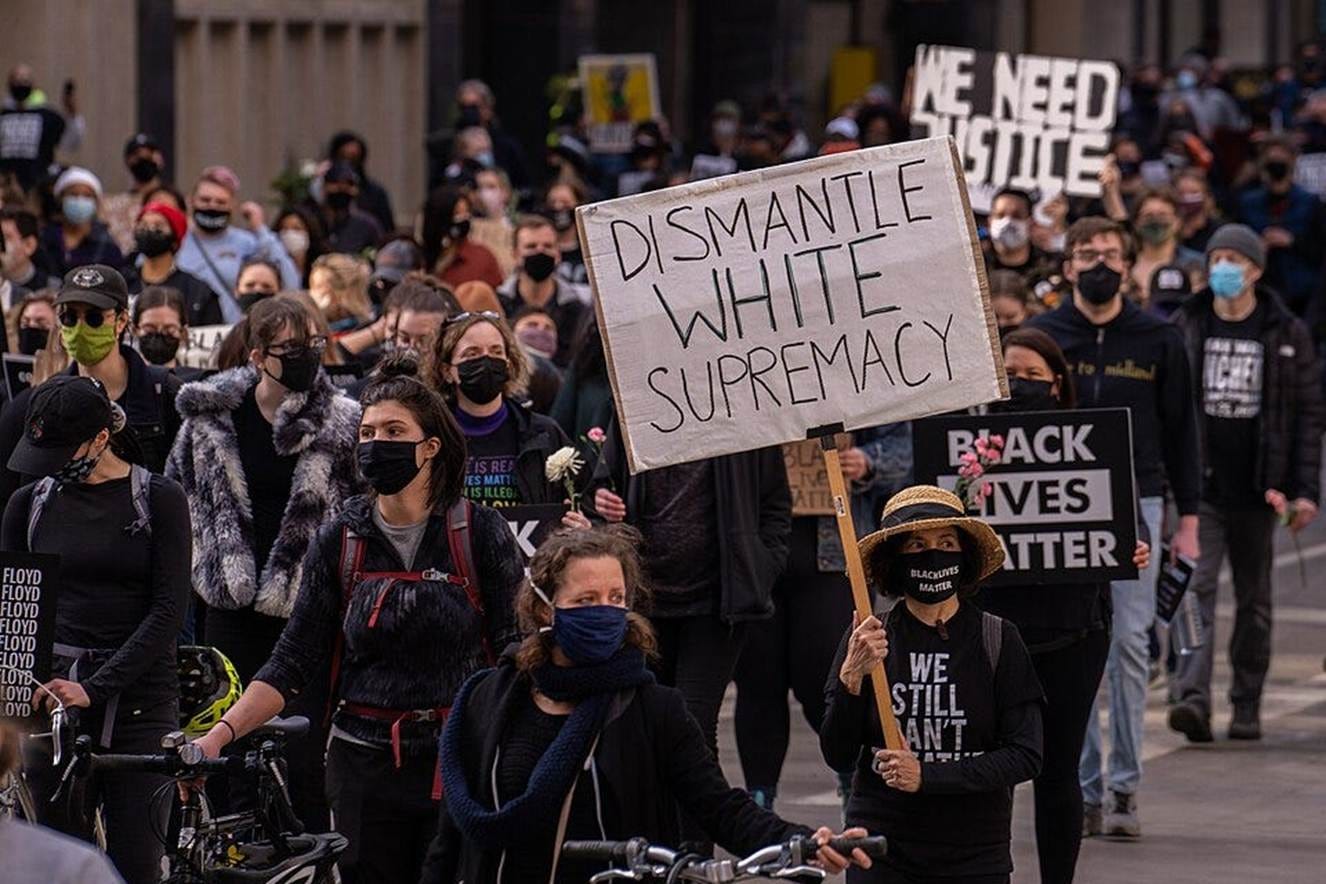
Photo: Chad Davis, Deed - Attribution-ShareAlike 2.0 Generic - Creative Commons
DS: Moving on to your own specific case, could you describe what you were charged with and why?
TT: Federally, I was convicted of violating Floyd’s civil rights. The state conviction was aiding and abetting second-degree manslaughter.
I have often been asked by people in law enforcement and by the public how someone who was doing crowd control and never touched Floyd could have been charged. It makes no logical sense. I usually tell them they have not gone crazy.
I believe I was charged because I would not bend the knee to the mob and could not be bribed as a witness. That made me a problem witness for the prosecutors, so in order to get rid of me, they had to charge me. In a way, this heavily handicapped Chauvin’s ability to defend himself in court. Why do I think this? I refer you back to the original prosecutors removing themselves from the case.
It is impossible to defend yourself in court when you have Tim Walz, Keith Ellison, Jacob Frey, Minneapolis Police Department Chief Medaria Arradondo (his book was also dependent on the outcome of our case), and Judge Peter Cahill pointing fingers at you. On top of that you have the Biden Department of Justice and mainstream media pointing fingers at you without any concern for evidence. That is mob justice.
DS: What was it like to be accused of such serious crimes by the state knowing that you were innocent and that you stood little chance of receiving a fair trial?
TT: It was extremely discouraging. To see abuses of power and authority by those in positions that should be trusted by its citizens made me angry. What was being projected onto us was in fact what was being done to us by those in powerful positions. It was only by the grace of God and His mighty hand that I was able to stand up to evil and call it out as such, knowing that it would cost me much pain.
DS: How long of a prison sentence did you serve? What was prison like? How did the inmates treat you?
TT: I was sentenced federally to 42 months. In Minnesota state court, I was sentenced to 57 months, the maximum allowed. Both sentences were served concurrently. With good time, I served a little over three years.
As far as my prison time, literally the first day was probably the worst in prison. An attempt was made on my life. But thanks to Providence, I was in a hospital prison. So they moved me from the general population into the hospital side of the prison. This allowed me to care for sick inmate patients and preach the Gospel to many of them.
DS: What was the reason an attempt was made on your life? Did you ever find out their motive?
TT: Obviously, I was involved in a case that became extremely publicized and polarizing. It was on the 24-hour news cycle for months on end. I found it interesting to learn later on from other inmates that they knew I was coming to that specific prison months in advance, before I even knew. Someone in authority obviously had tipped them off.
On my first day I was warned by some concerned inmates that they had heard of plans to attack me. That would occur shortly thereafter when my roommate would leave the cell. The masked attackers made it obvious to me that they intended to drag me into a different room. I would imagine it was not to play a card game, but likely to eliminate me.
One thing I have learned going through this experience is that there are some who are in positions of power who are afraid of people who exercise their First Amendment right to expose corruption and misconduct. Some will go to great lengths to ensure that never happens.
DS: How did your family deal with your imprisonment? How did prison change you?
TT: It was difficult for my wife and children to not have me around. My wife would often tell me that my three-year-old daughter, for the first year, would fall asleep next to the front door waiting for her daddy to return.
Prison definitely changes a person. For me, what was meant for evil, God used it for His sanctification purposes and to use the experience to build me up.
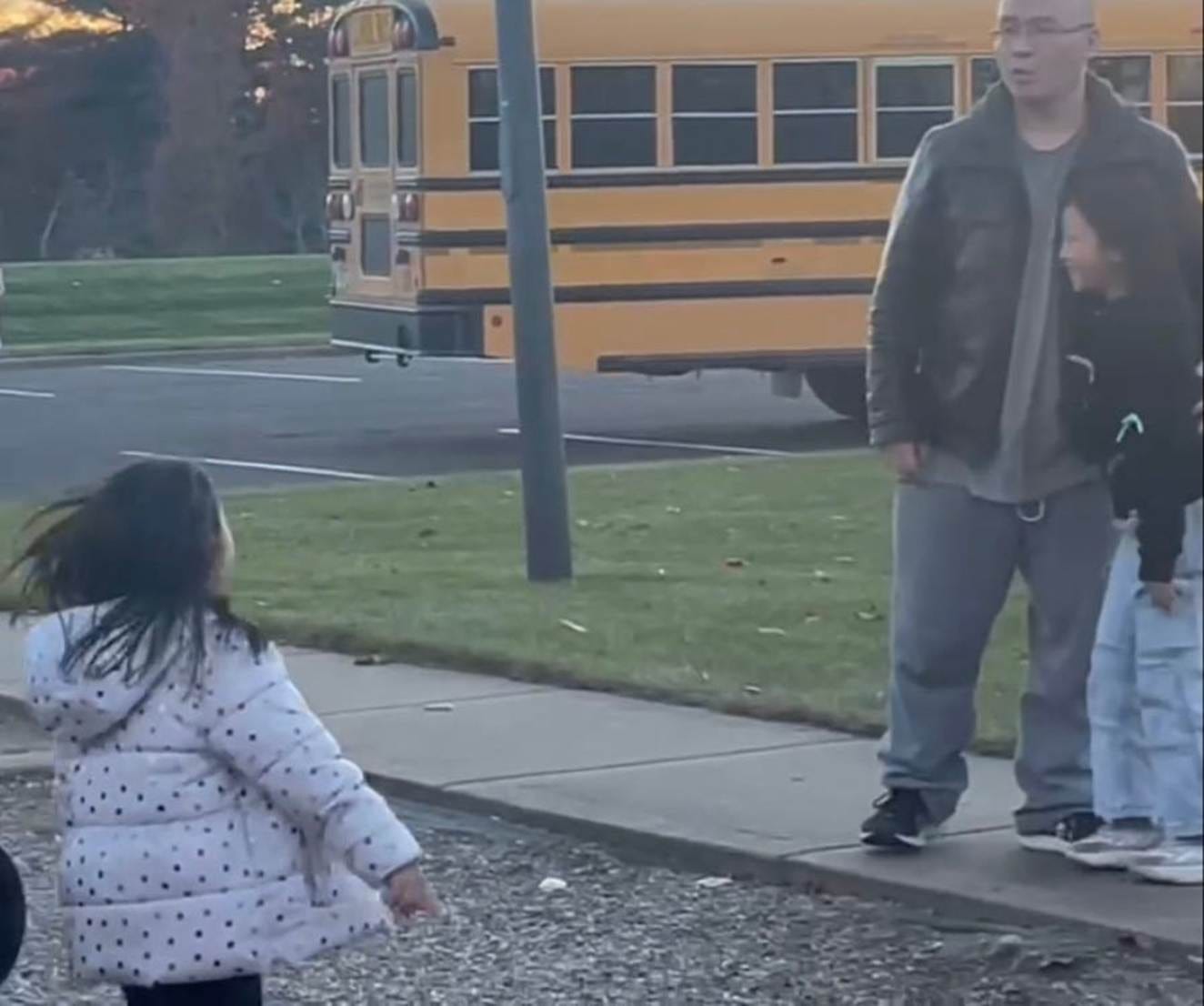
Tou Thao reuniting with his family after being released from prison.
DS: You are a Christian who has made it clear that your faith is a central part of your life. What role has your faith played through the grave injustices and hardships you have suffered over the past six years? How has your faith been challenged?
TT: My faith in Jesus is the only reason why I am here speaking to you today.
As we know, Jesus says that in this life we will have trials and tribulations, but he has overcome the world. That is a promise those who are suffering can hold on to.
We also know in Romans 5:3-5 that we rejoice in our sufferings, knowing that suffering produces endurance, and endurance produces character, and character produces hope. Pastor Adrian Rogers once said, “A faith that cannot be tested cannot be trusted.” With that I can rejoice in a genuine faith that has been tested and challenged by fire over the last six years. Praise God!
DS: What is motivating you now to speak out about your case and the Chauvin case? What do you want the public to hear and understand? What would you encourage the public to read or watch to become more informed on these issues?
TT: Could I move on with my life? Yes, but if I know the truth and allow an innocent man to languish in prison, what good am I to God? Ephesians chapter 5 says we must expose the works of darkness. As children of God we are bound by Scripture to say something, even if it takes us out of our comfort zone.
We have been called to not live in comfort, but to speak truth. Dietrich Bonhoeffer once said, “Silence in the face of evil is itself evil.” So I cannot stay silent, even at the cost of my own safety. We have not been called to live in safety, but to stand our ground against evil.
As far as this case goes, I would encourage your readers to watch, free on YouTube, “The Fall of Minneapolis” by Liz Collin and Dr. J.C. Chaix. I also encourage your readers to watch “Minnesota Mao,” also produced by them. This reminds us that the enemies of our nation are not at the gates, but inside the gates now, infiltrating all our institutions. I believe it is our responsibility to ensure fertile ground for the faith of our children to be practiced and matured in this nation.
DS: Tou Thao, thank you for taking the time to share your story with us. Your courage and resolve are an inspiration to many of us. We wish you and your family the best.
TT: Thank you for allowing me this time to share my story.
Tou Thao is an American patriot and a hero.
Mr. Thao, your grace under this pressure is a testimony to a deep and abiding faith in the One who died for our sins, and I was moved to tears at this quote:
But thanks to Providence, I was in a hospital prison. So they moved me from the general population into the hospital side of the prison. This allowed me to care for sick inmate patients and preach the Gospel to many of them.
May God abundantly bless you and your family as you continue to share your testimony and rebuild your life.