

A Parable: The Bridge on the River Grande
As America faces an invasion, Colonel John Roberts holds a pivotal position. The River Grande separates American soil from millions of invaders, and America’s enemies demand that Roberts build a bridge to let them cross, insisting the law requires it. Roberts, proud of his identity as a man committed above all else to principle, builds the bridge anyway, fully aware of the threat it poses to America.
This sort of slavish adherence to abstract principle has been a recurring conservative vice. Its consequences are vividly illustrated in David Lean’s 1957 epic The Bridge on the River Kwai. In the film, British prisoner-of-war Colonel Nicholson, proud of both his management ability and his principled commitment to the “rules” of war, has his men build a bridge to help his Japanese captors defeat his own countrymen.
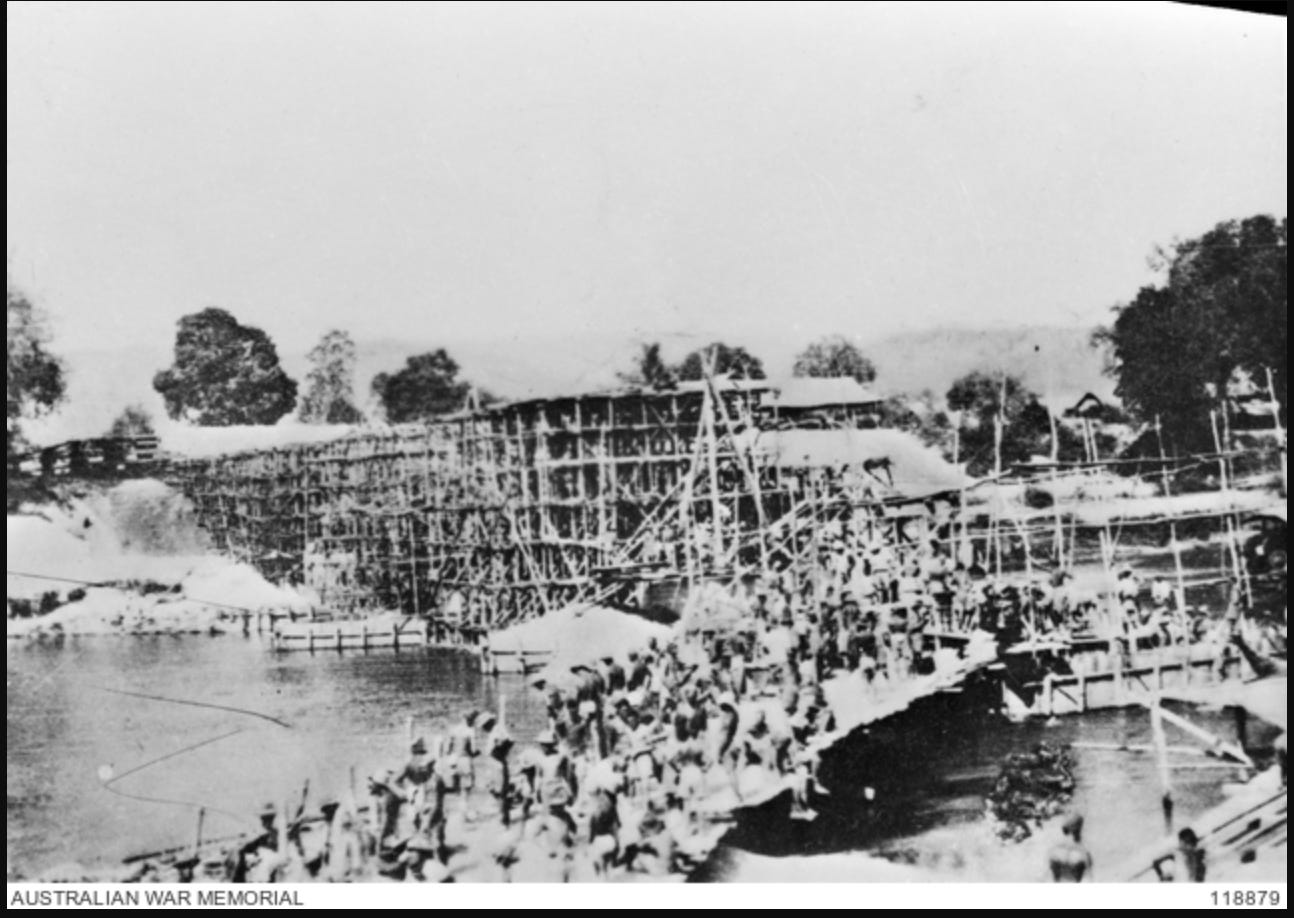
Burma-Thailand Railway. c. February 1943. Allied prisoners of war (POWs) engaged in bridge building at Tamarkan, Australian War Memorial
While Lean’s story is historical fiction, the behavior it dramatizes is epitomized by Chief Justice John Roberts’s ruling in Trump v. Barbara, which held that the Constitution requires granting citizenship even when it was obtained through crime or fraud—opening our borders to people hostile to our interests and squandering a status central to self-government.
Like Roberts, thousands of conservative and Christian leaders have treated abstract principles as ends in themselves rather than as means to particular goods. In the name of principle, they have refused to use their power to protect their institutions and communities from direct attacks by the left. And in the name of principle, some have even dismissed or denounced those willing to actually fight.
Responsibility and Purpose
No matter how sincere the underlying belief, such surrender is fundamentally irresponsible. By making principle—or fidelity to abstract norms—their defining virtue rather than responsibility, many conservatives have abandoned the fundamental purpose of politics: protecting a body politic and the conditions conducive to its good. Once this purpose is understood, responsibility follows naturally as the defining obligation of a leader.
When properly ordered, principles advance these fundamental goods rather than impede them. This theme pervades both human and divine law: the preamble to the U.S. Constitution makes clear that its purpose is to protect and promote the good of the American people, and Christ made clear that God’s law exists for our good. The error comes when this purpose is forgotten and principles are treated as ends in themselves. Christ rejected efforts to make rigid adherence to the law an end in itself, and Americans should likewise reject constitutional legalism and other blind commitments to abstract principle. “The sabbath was made for man, not man for the sabbath”—and the Constitution is not a suicide pact.
The Duty to Win
For any body politic, the most fundamental good is protection. When a community or institution faces an existential threat, anyone entrusted with power within it must take responsibility, first and foremost, for its protection. To disregard that responsibility is a betrayal. Loss brought about by adherence to human principle is as much a sin as loss brought about by pride, laziness, or cowardice. The highest duty is owed not to abstract ideals but to the people for whom one is responsible—a duty subject to God’s law, and also derived from it.
The practical implication is stark: when one has been entrusted with responsibility and one’s cause is righteous, one has a duty not merely to fight, but to win.
This means doing what victory requires, not merely what feels comfortable within the norms of one’s community or social class. Too many of the conservative losses of the past century—of churches, universities, and denominations; of foundations and fortunes; of American culture itself—resulted from half-hearted resistance. Leaders who made great show of their deference to manners and principles allowed the institutions entrusted to them to slip into the control of people who perverted and destroyed them. These leaders abrogated their most fundamental responsibility.
The Duty to Cooperate
In any serious conflict, victory requires working well with others. People suited to one role must tolerate and cooperate with those suited to other necessary roles, despite differences in culture, values, or temperament. Disparaging or dismissing potential allies, no matter how “principled” the reason, divides coalitions and hands easy wins to enemies who threaten far greater evils.
We remain locked in a serious contest over the future of America. The racial and sexual frenzies and open borders of the Biden era showed that even “mainstream” Democrats are committed to revolutionary change, and the success of openly socialist candidates in Democratic primaries suggests that the intensity of these efforts will only increase. These are not mere policy disagreements: to lose politically would mean the loss of our country, our way of life, and perhaps our very lives.
Defeating this threat requires more than rallying populist energy at the polls. It requires a concerted fight across many fronts: removing millions of people from America, recapturing or destroying institutions that have been lost, and rewriting the political and legal norms that block reform or enshrine harmful policies. We must build—or rebuild—the institutions, bodies of knowledge, networks, and talent pipelines needed to replace those hopelessly corrupted by the left. We must renew our churches and our culture. And we must demonstrate both the ability to use power and a moral vision capable of building real legitimacy.
Some of these functions suit people who are temperamentally conservative; others suit people drawn to new ideas and approaches. Some require following established norms within elite circles; others require transgressing a wide array of manners and conventions. Some projects will draw morally upstanding Christians; others will attract people of coarse morals, suspect motives, and disagreeable temperaments.
To preserve our civilization, we need all these roles. Right-leaning Americans form the largest single faction in the country, while the left remains a coalition of disparate groups united by little more than a desire to erase American culture or extract resources from the American people. Our central weakness has been discord among these groups and classes: too many intellectuals and professionals hold the populist base or the fighting edge in contempt, while too many populists and fighters distrust all political compromise, calls for strategic restraint, or pragmatic business relationships. Success will require productive collaboration among builders and organizers, intellectuals and strategists, funders and fighters.
For a movement defined by adherence to principle, this is difficult: each of these classes tends to have different and often conflicting norms, and any alliance can feel like compromise. In The Bridge on the River Kwai, Colonel Nicholson’s disdain for “Commander” Shears’s brash American style and willingness to break rules illustrates the division this mindset produces. The left’s continuing institutional power intensifies the pressure on those who want to appear principled to issue performative denunciations and distance themselves from the rougher factions on the right, and it deepens the base’s distrust of those active in elite circles.
In contrast, a movement built on responsibility recognizes that a serious threat demands such collaboration. Each group has a crucial role: fighters who dive into conflicts to challenge enemies, builders who create institutions, funders who support the effort, strategists who chart paths through complex conflicts, politicians who build pragmatic coalitions, and intellectuals who develop the ideas the movement needs. Each group will have its own manners and norms, and even the most virtuous and committed people within each will have to collaborate with figures other groups find distasteful. Each deserves deference in pursuing its core function, and each owes a degree of deference to those fulfilling other functions. The overarching theme must be a shared responsibility for our society and civilization, and the right response to external pressure is greater in-group loyalty among those committed to this responsibility.
An American Moral Framework
The principles advanced by the right have also proved politically ineffective, unable to unite a winning coalition of Americans. This may reflect both a deficiency in those principles; a focus on subordinate rather than primary values; and their mismatch with the American tradition. The mismatch is apparent across past and present strands of the right: both traditional postwar conservatism and neoconservatism were heavily shaped by foreign and Catholic thinkers; contemporary conservatism remains disproportionately Catholic; and “red pill” commentary carries Islamic elements, sometimes overtly. None of these traditions has a value system likely to achieve broad appeal in America, and the conflicts among them may explain the mutual contempt found among different groups on the right.
Leftists have been more successful, framing their “progressive” value system—and especially their core principle of equality—as a continuation of America’s fundamental values. Even the “woke” frenzy of the last decade drew on the moral language of the American founding and of America’s Calvinist tradition, despite its disparagement of most of the figures associated with both. Most importantly for their political efforts, leftists widely accept that nearly all stated principles remain malleable, subordinate to their fundamentally revolutionary goals. In sum, “principle” has proved a potent weapon for the left, allowing it to consolidate power and claim the moral high ground even when its policies produce results many Americans recognize as harmful.
In response to the ills attributed to principle-based politics - from self-imposed impotence to intra-right conflict to leftist moral victories - some contemporary influencers propose a broad rejection of universal-values claims, pushing instead for a political agenda explicitly focused on in-group preference. But aside from the moral merits of such an approach, it risks alienating many Americans. The American tradition, and the broader Protestant and even Christian traditions, have always tended toward universal claims. The prevalence of principle-focused cultural and political norms across the Protestant (and post-Protestant) world reflects this tendency—Colonel Nicholson’s commitment in The Bridge on the River Kwai epitomizes a particular Anglo-Protestant strand of it. Even if a shift toward in-group-focused values is directionally correct, it is almost certainly too foreign to our tradition to gain traction. We should instead look within our own tradition for solutions: ideals that, even when applied universally, contribute to necessary action rather than undermining it.
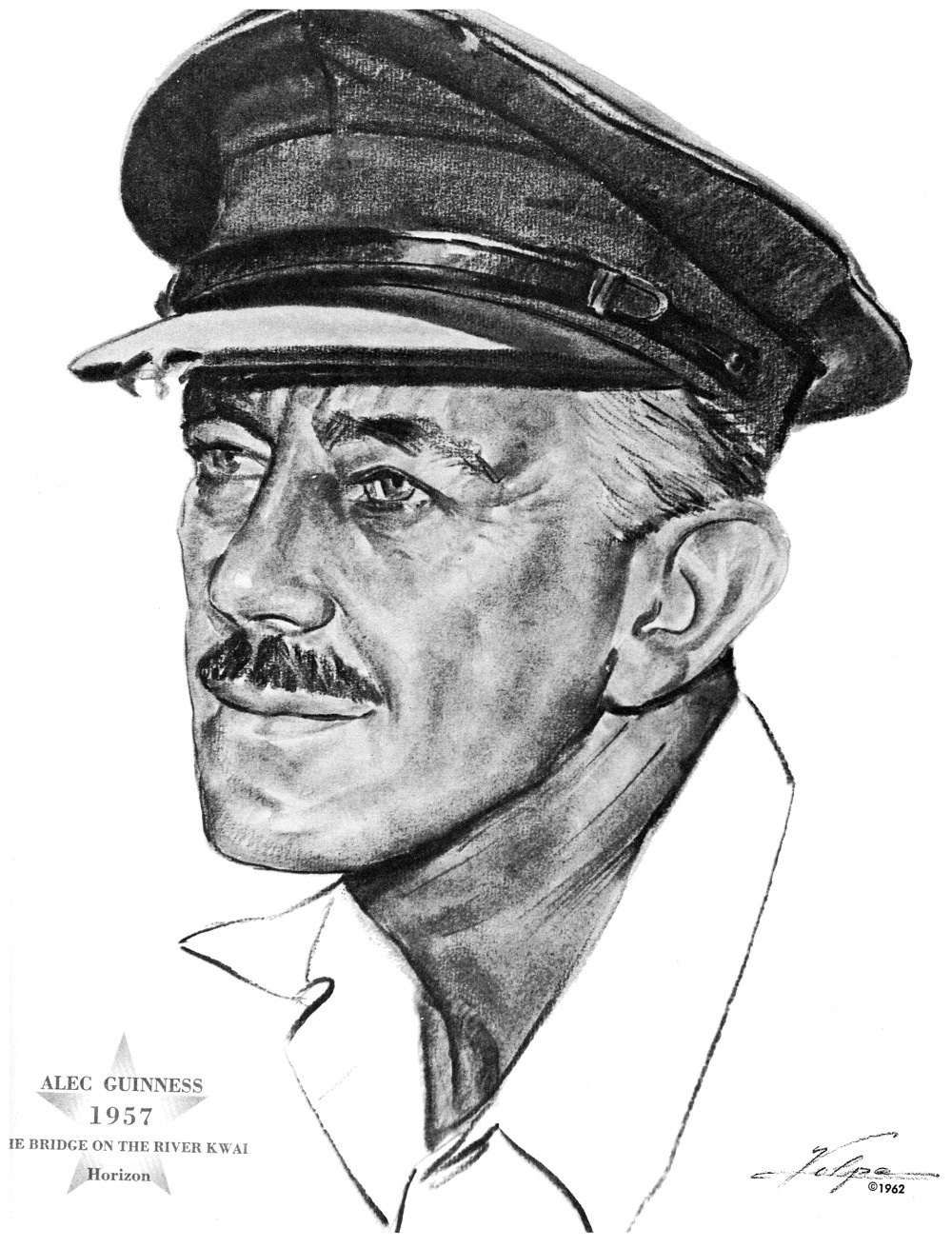
A charcoal drawing reprint by Nicholas Volpe (1957) of Alec Guinness as Colonel Nicholson in Bridge Over the River Kwai
The duty of responsibility offers a solution. This duty pervades the American Protestant tradition; re-emphasizing it allows us to build on that tradition to address the critical errors of both the legacy conservative movement and modern liberalism, shifting the focus from subordinate norms or idealized values to actual outcomes. The underlying principle is universal—all men owe responsibilities to God and to their fellow men—yet every application is particular to one’s station and community. This does not require abandoning the love of principle that is a real virtue of our tradition, but it helps clarify the hierarchy of duties, norms, and principles in both ordinary and extraordinary circumstances. A movement centered on the duty of responsibility can unite a broad coalition of Americans of different stations and temperaments around the central need to preserve our country and our civilization.
Conclusion
Principle has always held a high place in the Anglo-Protestant tradition. Leftists have redefined American identity around universal liberal principles. Legacy conservatives have bound themselves into impotence by universalizing conservative principles. Overcoming this does not require replacing our tradition but rather recognizing that human principles exist within hierarchies. Our tradition has long recognized the duty of responsibility as an overarching human obligation, inherent to our role as rulers and stewards of the earth. This duty, and the concrete ends to which it points, was largely abandoned by both sides as they reframed subordinate or perverted principles into ends in themselves. Responsibility reverses this, requiring that we take the actions—individually and collectively—necessary to protect the particular people, communities, and institutions entrusted to us.
Nate Fischer is a founder of American Reformer. He is also the founder and CEO of New Founding, a venture firm focused on American revitalization, and a co-founder of several other civic organizations.